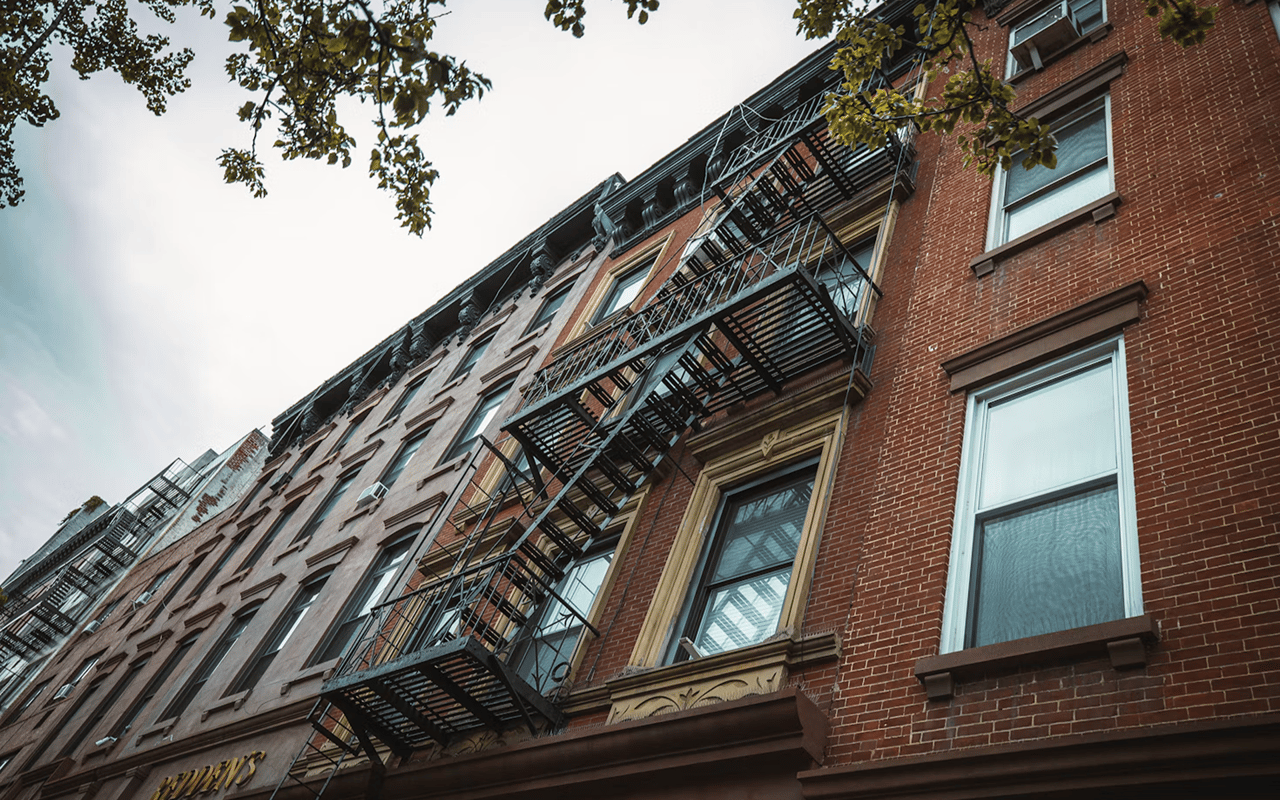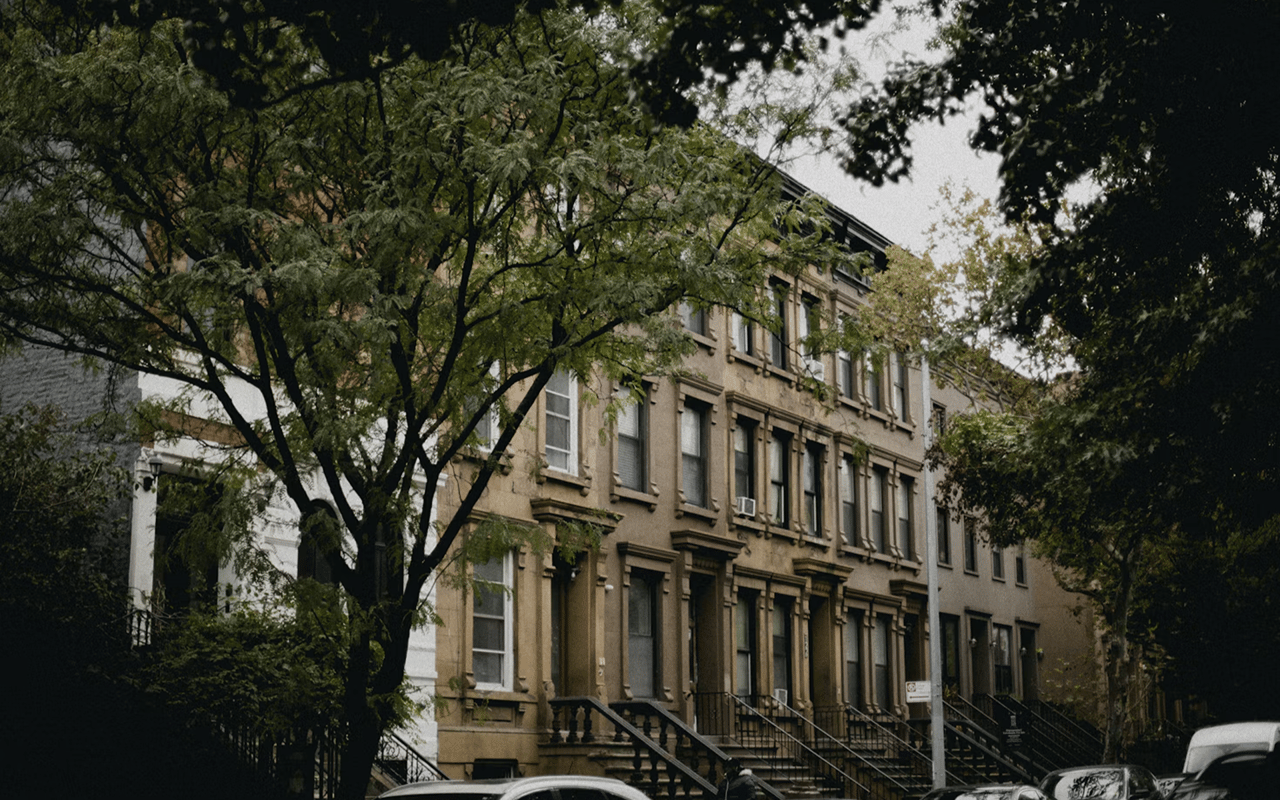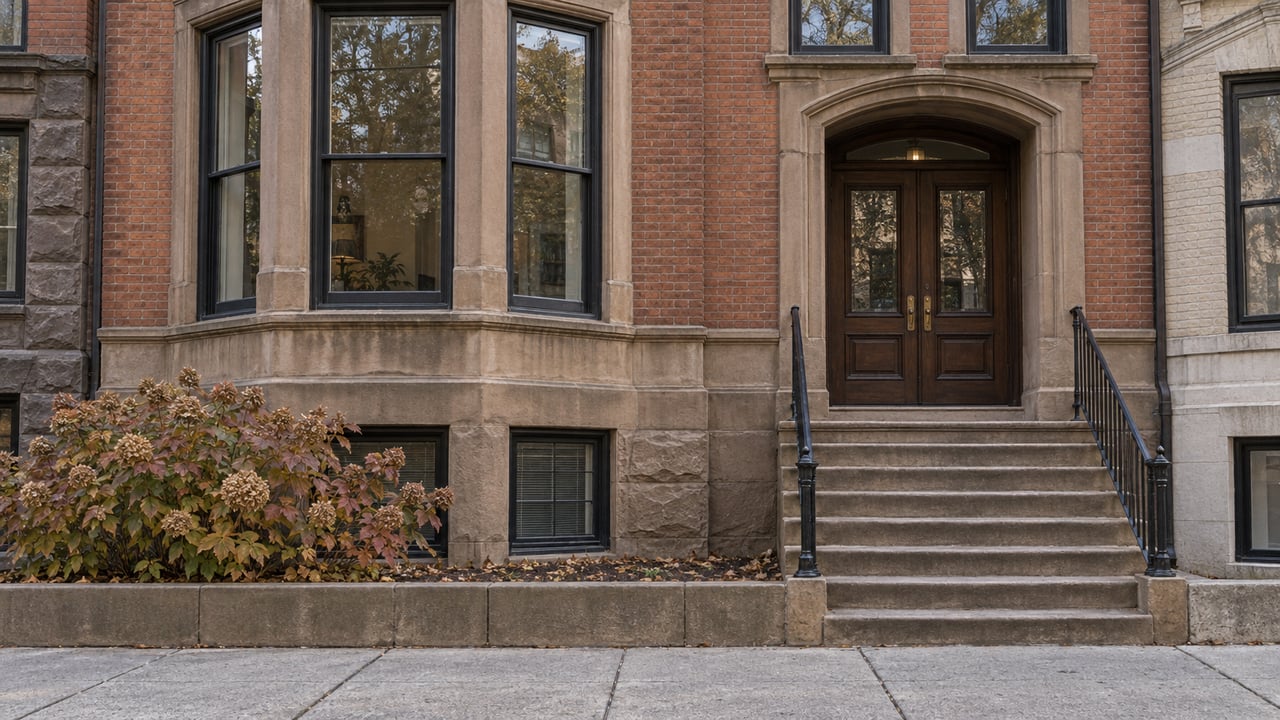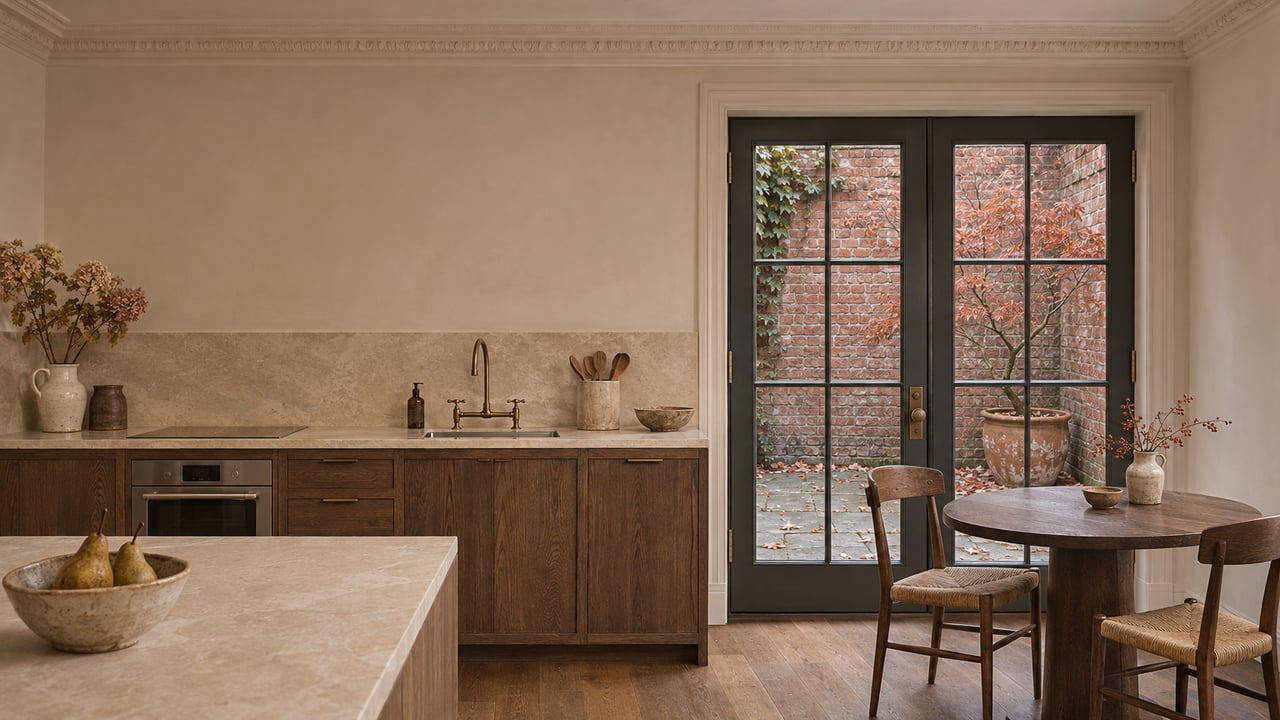
A West Village townhouse listed "with approved plans" is not the finished house the plans describe. The asking price often treats the two as if they were the same thing. Contracts signed this fall show buyers treating them very differently.
A Landmarks approval at 156 Waverly Place
The Commission's decisions also say plainly that its approval is not the end of the process. The March 25, 2025 decision for 156 Waverly Place, a Greek Revival house built in 1839 in the Greenwich Village Historic District, approved with modifications a rooftop addition, a rebuilt rear facade, excavation of the cellar and rear yard, new windows and a stoop gate. It also lists the Department of Buildings as an agency whose action is still required.
34 Perry Street and approved plans
The clearest recent example is a Greek Revival house at 34 Perry Street, built in 1845. In the 1920s, New Yorker cartoonist Al Frueh added a top-floor studio there, and the steel casement windows and north-facing skylight survive. CityRealty reported that the current owner bought the house for $12 million in October 2021. In December 2023, the Commission approved a rear-yard addition and other changes.
The owner did not build. The house was listed in March 2026 at $13.95 million, offered with plans approved by both Landmarks and Buildings. In August 2026 the price was cut by $1 million, or 7.2 percent, to $12.95 million.
Here is how those figures relate:
- Paid in 2021: $12 million for the house, before any approval.
- Asked in March 2026: $13.95 million, or $1.95 million more, for the house plus the approved plans.
- Asked as of August 2026: $12.95 million. That is $950,000 above the 2021 price, after nearly five years and a full approval process.
The plans are not the expensive part
Buyers discount approved plans because design and approval are the smaller part of the cost. In February 2026, Bloomberg CityLab reported that on large Manhattan townhouse projects, hard construction costs alone can run $1,400 to $2,500 per square foot. That figure excludes legal fees, architects' fees and, in some cases, payments to tenants or neighbors.
34 Perry is described as nearly 4,000 square feet. The work approved at 34 Perry is narrower than a full rebuild.
Finished houses are what buyers are signing for
Move-in-ready houses that arrived this fall have moved at prices much closer to their asks. In late September, The Real Deal reported that 48 Jane Street led all Manhattan luxury contracts signed September 21 to 27, asking just under $15 million. The house is four stories, 22.5 feet wide and 4,100 square feet, with a back garden, skylights and wood-burning fireplaces. It was renovated with the architects Fairfax & Sammons and had not changed hands since 1996. It first hit the market the previous October at $15.5 million.
That cut of about 3 percent over roughly eleven months compares with the rest of that week's contracts. Across the 17 Manhattan homes asking $4 million or more that signed contracts that week, the typical home had been on the market more than a year and a half and was discounted by 14 percent. In the first full week of November, 29 Downing Street was Manhattan's highest-priced townhouse contract, according to CityRealty, at an ask of nearly $12 million.
Buyers pay for finished houses because there are few of them. According to Jonathan Miller's third-quarter 2026 report for The Real Deal, as summarized by Brick Underground, a sharp drop in Manhattan townhouse listings held back sales in that segment. The average townhouse sale price fell 18.6 percent to $6,331,987 in Q3 2026. That decline partly reflects an unusually large sale in the prior quarter. The Real Deal noted that the $70 million sale of 105-107 Bank Street in May lifted second-quarter figures, and that Manhattan townhouse listing inventory in Q2 2026 was still more than 20 percent below its ten-year average. With so few sales each quarter, one house can move the average. The low inventory is the steadier signal.
Where new single-family houses come from
When few finished houses are for sale, new single-family supply in the West Village largely comes from converting other buildings. Bloomberg CityLab's analysis of city tax-lot data found that since 2004, one in six small multi-family buildings in the West Village, those with two to eight units, has been converted into a single-family home. Bloomberg describes that count as conservative. Of the 19 Manhattan townhouse combinations Bloomberg identified since 2010, ten are in the West Village.
75 Charles Street is the latest example. An LLC bought the eight-unit rowhouse for $10 million. About six months later, at its September 29, 2026 hearing, the Commission unanimously approved plans by Steven Harris Architects to return it to a single-family house. The plans include an Italianate facade with arched windows and a cornice, a rooftop penthouse, a rebuilt rear facade and a rear-yard extension. The architects' presentation to the Commission is public. Harris told Bloomberg that when brokers call his firm now, "they're often looking for two adjacent houses."
The most expensive version is a combination of two buildings. 105-107 Bank Street was once a pair of multi-family buildings, one of which included a duplex shared by John Lennon and Yoko Ono. Developer Robert Kaliner of RoundSquare Development and Robert A.M. Stern Architects turned them into a single house of about 13,500 square feet over more than three years. It was listed in October 2025 at $75 million and sold in May 2026 for $70 million.
At 75 Charles, the buyer took the approval risk before getting a vote. At Bank Street, the developer took the approval risk and the construction risk, then sold the finished result. At 34 Perry, the house was offered with approved plans, but the owner did not build.
Approvals operate inside a changing policy debate
The Commission is currently one of the few official checkpoints for converting or combining buildings, and its review centers on how a building looks from the street. Some people want more rules. Urban planning consultant George Janes told Bloomberg he sees a new proposal to turn a multi-family building into a single-family home about once a week, and he has suggested zoning changes that could limit conversions that reduce a building's unit count. Kaliner argued in the same piece that the city should focus on removing barriers to building. None of these ideas has become a rule. For someone buying a building to convert, though, the time between purchase and finished house is when a policy change could still affect the project.
This post is general information about Landmarks approvals and recent transactions. It is not legal, tax or financial advice, so please confirm the specifics of any property with your attorney, architect and lender.
If you are pricing a West Village house that comes with approved plans, or deciding whether to sell your plans or build them first, The Kantha Team can show you how comparable approvals, construction timelines and recent finished-house contracts compare on your block. Schedule a consultation to go through the numbers for your house.