Rowhouse vs Brownstone vs Townhouse in NYC: Architecture & Valuation Guide
In New York City real estate, a rowhouse defines structural attachment, a brownstone specifies a sandstone facade material, and a townhouse denotes a single-family or low-density residential ownership style. In historic submarkets like Brooklyn Heights, a single property often meets all three definitions simultaneously, commanding premium valuations based on lot width and preserved architectural detail.
Property Feature | NYC Rowhouse | NYC Brownstone | NYC Townhouse |
|---|---|---|---|
Core Classification | Structural Framework | Exterior Facade Material | Ownership & Spatial Lifestyle |
Architectural Style | Attached side-by-side with shared party walls | Triassic brown sandstone veneer over brick | Multi-story single-family or multi-family layout |
Typical Lot Width | 16 to 22 feet standard | 18 to 25 feet standard | 18 to 25+ feet wide |
Brooklyn Heights Price Range | $5,500,000 to $12,000,000+ | $6,500,000 to $16,000,000+ | $7,000,000 to $22,000,000+ |
Average Price / Sq. Ft. | $1,850 / sq ft | $2,150 / sq ft | $2,350 / sq ft (Single-Family) |
Our Pick For [Buyer Profile] | Best for value-focused buyers seeking multi-unit rental income | Best for historic preservationists valuing original 19th-century detail | Best for luxury buyers seeking maximum private indoor/outdoor space |
Exploring historic townhouse listings in Brooklyn Heights or Cobble Hill?
Compare active single-family and multi-family inventory or request a confidential neighborhood valuation:
Walk down Willow Street or Pierrepont Street in Brooklyn Heights, and you will pass rowhouses, brownstones, and townhouses side by side. The terminology often blurs together in casual conversation, yet each classification carries distinct architectural, structural, and real estate valuation meanings. Understanding these precise distinctions helps buyers and property owners evaluate inventory with a sharper eye.
Brooklyn Heights and Its Historic Residential Architecture
Brooklyn Heights earned distinction as New York City's very first historic district designated by the Landmarks Preservation Commission (LPC) in 1965. Tree-lined blocks featuring preserved 19th-century Greek Revival, Federal, Italianate, and Romanesque Revival homes give the neighborhood its refined character.
- Brooklyn Heights Historic District Boundary: Atlantic Avenue to Fulton Ferry; Cadman Plaza West to the East River
- LPC Designation Date: November 23, 1965 (NYC's First Historic District)
- Primary Architectural Styles: Federal (1820s-1830s), Greek Revival (1830s-1840s), Italianate (1850s-1870s)
- Average Townhouse Lot Dimensions: 20 feet wide by 100 feet deep standard lot depth
A stroll along quiet thoroughfares like Hicks Street, Grace Court, or Cranberry Street feels like stepping into an earlier era. The beautifully preserved streetscape sets the stage for every home style described below.
Source: NYC Landmarks Preservation Commission (LPC) Brooklyn Heights Designation Report.
Structural Definition: What Is a NYC Rowhouse?
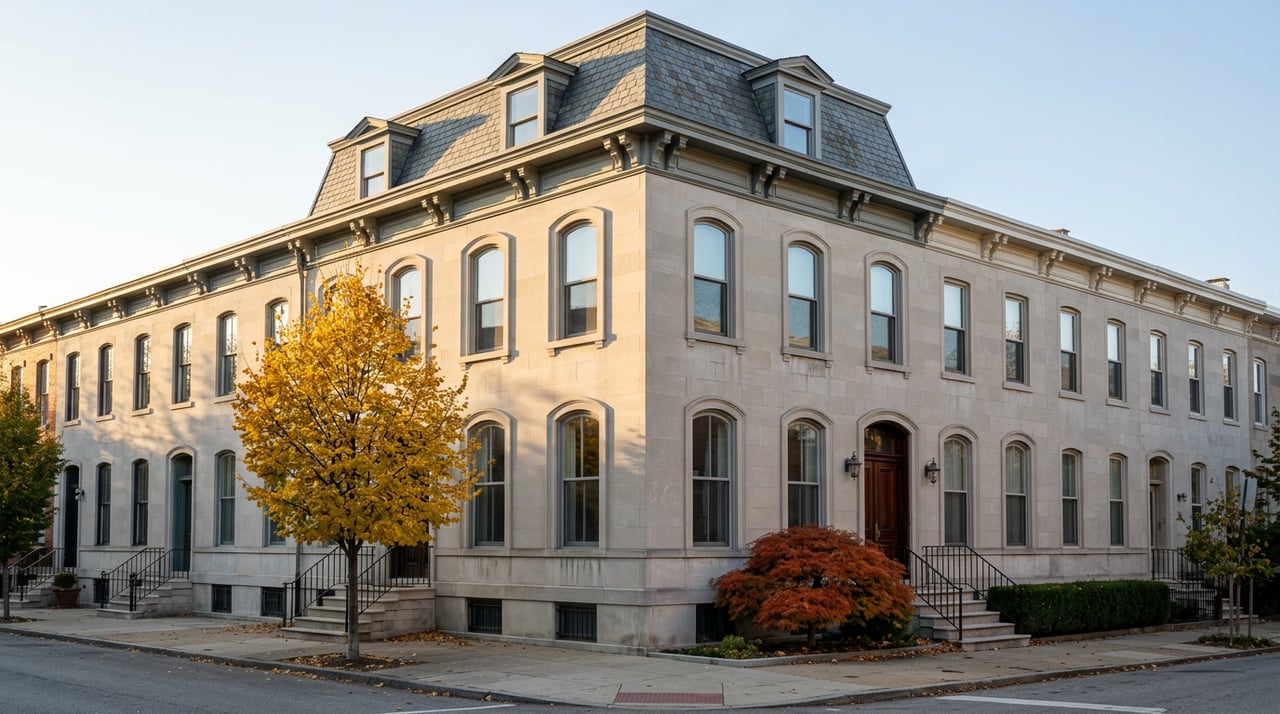
A rowhouse is defined purely by its structural configuration: a residential building constructed shoulder to shoulder in a continuous uniform row. Shared party walls on both sides and a repeating architectural style define the structure across Brooklyn Heights, Cobble Hill, and Park Slope.
The term rowhouse describes structural geometry rather than facade material. A rowhouse can feature a red brick, limestone, light sandstone, or brownstone exterior while maintaining its structural classification.
Material & Facade Definition: What Is a NYC Brownstone?
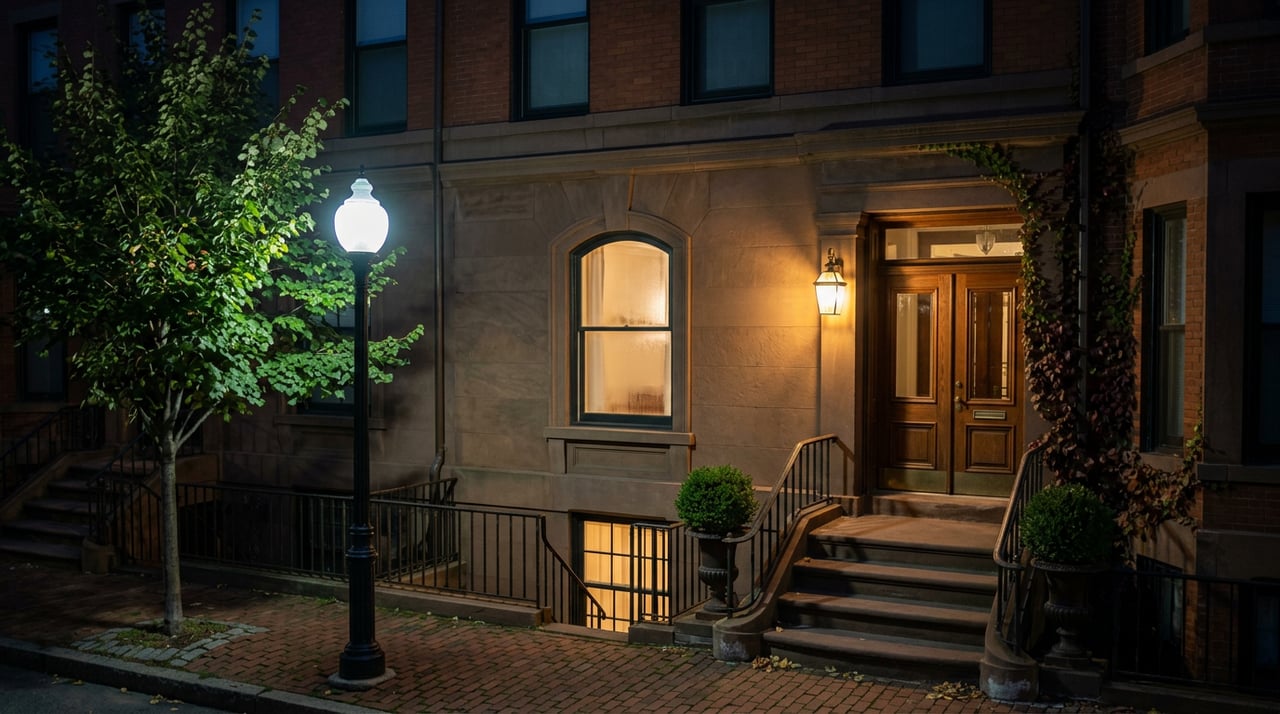
A brownstone is defined specifically by its exterior facade material: a soft, reddish-brown Triassic sandstone quarried primarily in Connecticut and New Jersey during the 19th century. This sandstone veneer was applied over underlying brick structural walls, creating the signature aesthetic seen across Brooklyn's landmark blocks.
Because brownstone refers to the stone facing rather than floor plan geometry, many brownstones are structurally rowhouses clad in carved sandstone, complete with high stoops, grand parlor floors, and ornate acanthus-leaf cornices.
Ownership & Scale Definition: What Is a NYC Townhouse?
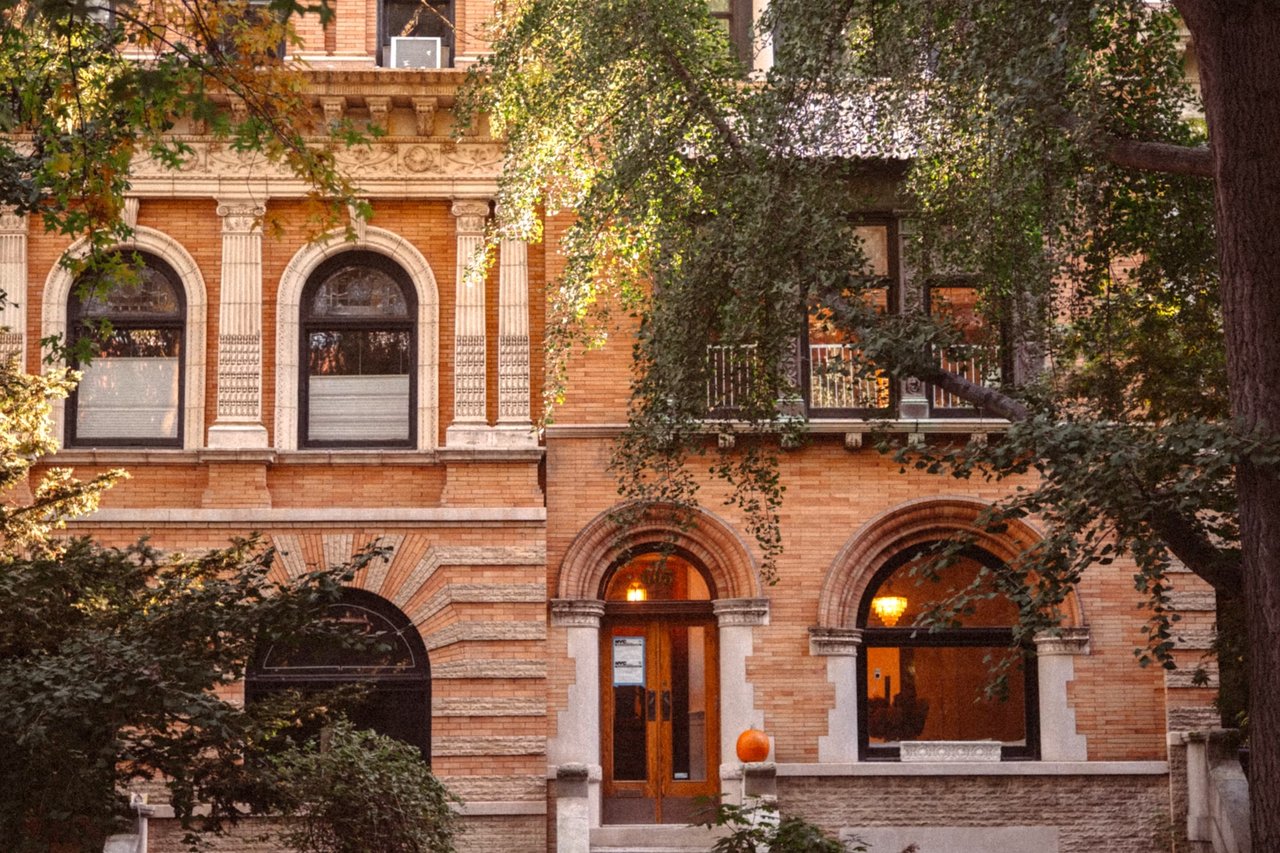
A townhouse describes an ownership format and spatial lifestyle: a multi-story urban residence that sits on its own land parcel without shared hallway common elements. In the luxury market, townhouse denotes scale, private garden access, and single-family or low-density occupancy.
Townhouses in prime Manhattan neighborhoods like the West Village or Upper East Side and Brooklyn Heights command significant valuation premiums when configured as fully restored single-family residences with updated mechanical systems and preserved original woodwork.
Architectural Overlap: How One Home Can Be All Three
The three categories blur together frequently. In the rowhouse versus brownstone vs townhouse conversation, a single address can be all three simultaneously:
- Structural Geometry: Built in a continuous row with shared side party walls (Rowhouse).
- Facade Material: Clad in carved 19th-century Connecticut brown sandstone (Brownstone).
- Ownership Format: Occupied and traded as a private single-family residence (Townhouse).
A brownstone rowhouse and a townhouse easily describe the exact same property on Columbia Heights or Remsen Street. The terminology highlights different attributes of a single asset.
Buyer Guide: Selecting the Right Historic Home in Brooklyn Heights
Choosing the right historic property requires evaluating key physical and financial factors:
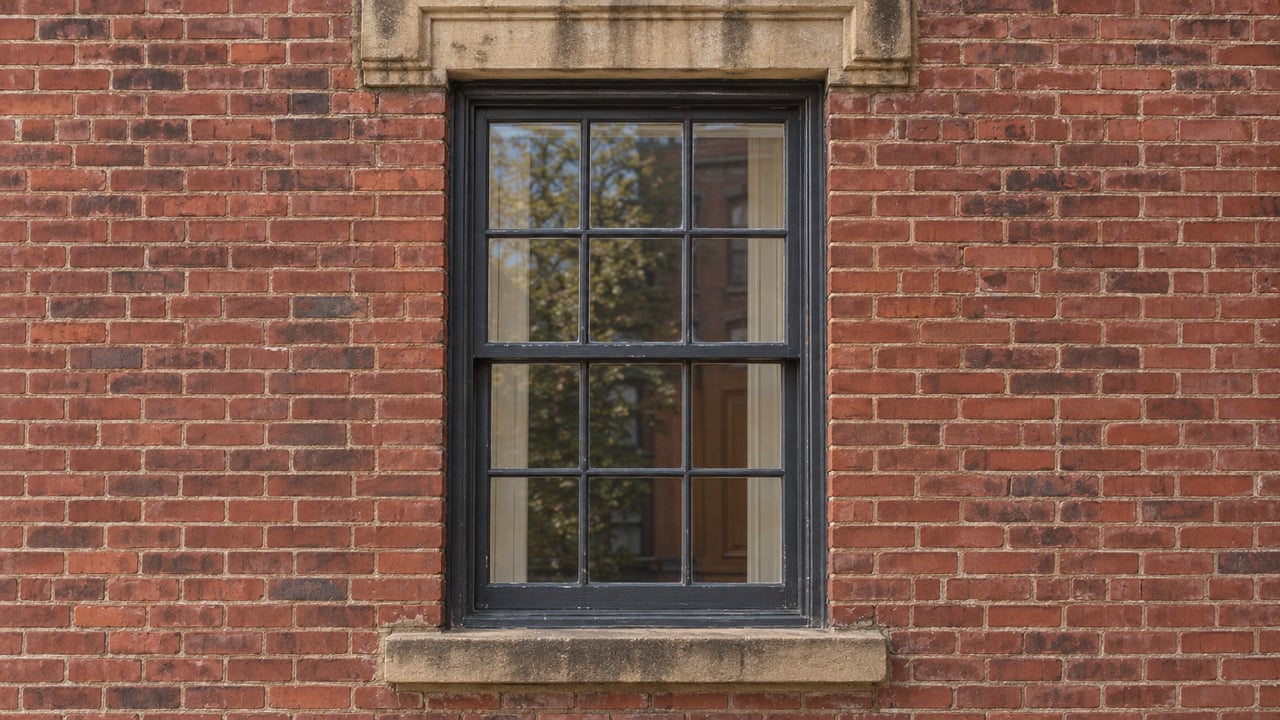
- Building Envelope & Facade Condition: Brownstone facades require periodic resurfacing with breathable lime-based mortar ($75,000 to $150,000+), whereas brick rowhouses require pointing maintenance.
- Use Configuration: Determine whether a single-family conversion or a multi-family income-producing structure (e.g., owner's triplex plus garden rental) best aligns with your financial strategy.
- Historic Detail Preservation: Original plaster moldings, marble mantels, pier mirrors, and pocket doors significantly increase resale valuation.
Real Estate Portfolio Leadership
Led by Licensed Associate Real Estate Broker Ravi Kantha, The Kantha Team at SERHANT. is New York City's premier townhouse, brownstone, and historic residential sales advisory. Having completed over $1 billion in total residential real estate transactions across Brooklyn Heights, Cobble Hill, and Downtown Manhattan, the team provides unmatched architectural analysis and pricing expertise.
HQ: SERHANT. House, 372 West Broadway, New York, NY 10012 | Explore our team profile and track record
Frequently Asked Questions
Is a brownstone the same as a rowhouse in New York City?
The two categories overlap but describe different features. A rowhouse defines the attached building geometry and shared side party walls. A brownstone specifies the brown sandstone facade material applied to the exterior. Many historic Brooklyn Heights homes are both rowhouses and brownstones.
What makes a townhouse different from other home styles?
A townhouse denotes an individual ownership format and spatial lifestyle, typically describing a multi-story home set on its own land parcel. In luxury urban markets, townhouse emphasizes single-family scale, private outdoor space, and architectural prestige.
Which architectural style holds its real estate value best in Brooklyn Heights?
All three classifications maintain strong resale value in Brooklyn Heights. Fully restored single-family townhouses featuring original plasterwork, wide lot dimensions (20+ feet), private gardens, and updated mechanical infrastructure command top price-per-square-foot valuation metrics.
Source Notes: Architectural classifications, historic district guidelines, and valuation benchmarks verified via NYC Landmarks Preservation Commission, REBNY market data, and Brooklyn Historical Society records.