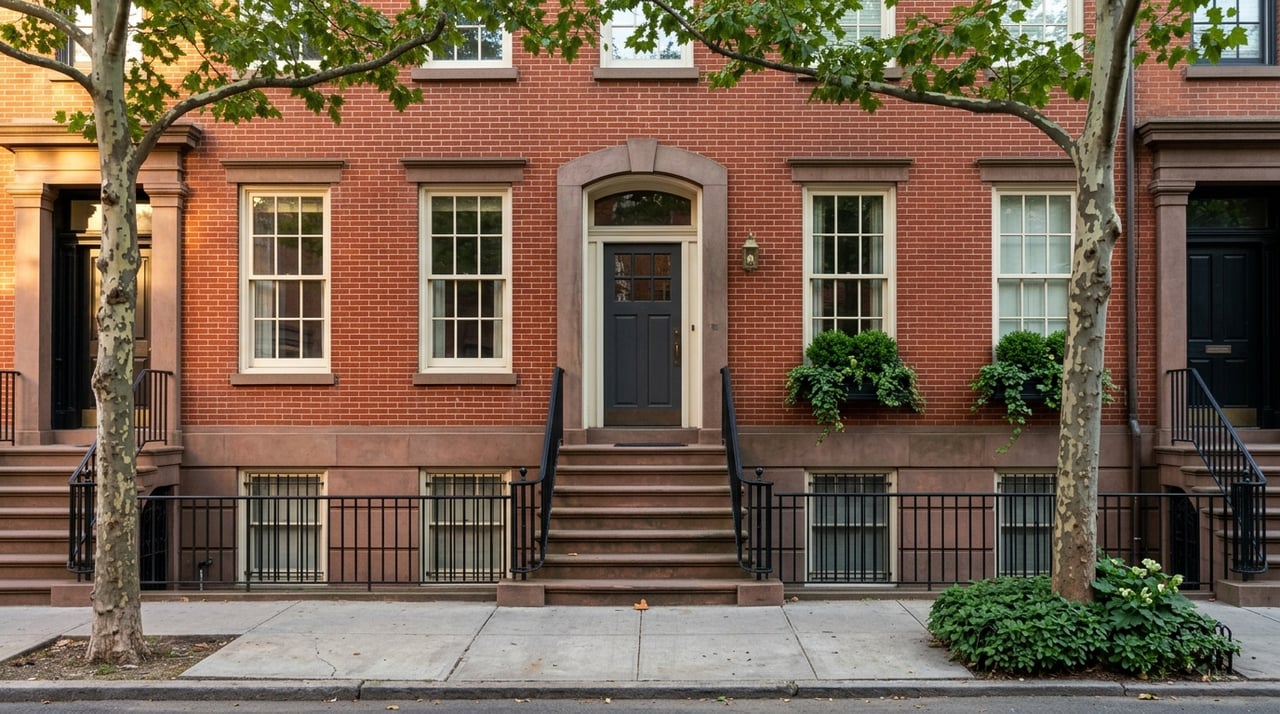
Carroll Gardens, Cobble Hill, or Boerum Hill for Townhomes
Carroll Gardens features deep 33-foot front garden setbacks, Cobble Hill balances retail corridors with historic 19th-century architecture, and Boerum Hill provides 3- to 4-story Greek Revival townhouses adjacent to 11 subway lines at Atlantic Av-Barclays Center.
Neighborhood | Community Board / LPC | Architectural Character | Primary Retail Corridors | Transit Access Hubs |
|---|---|---|---|---|
Carroll Gardens | Brooklyn CB 6 (LPC Landmarked) | 2- to 3-story rowhouses, 33-ft deep front gardens, high stoops | Court Street & Smith Street | F and G trains at Carroll Street |
Cobble Hill | Brooklyn CB 6 (LPC Landmarked) | 19th-century rowhouses, mews, early group developments | Court Street & Smith Street | Bergen St (F, G), Court St (R), Borough Hall (2, 3, 4, 5) |
Boerum Hill | Brooklyn CB 2 (LPC Landmarked) | 3- to 4-story Greek Revival & Italianate brick townhouses | Atlantic Avenue & Smith Street | Atlantic Av-Barclays Center (2, 3, 4, 5, B, D, N, Q, R, LIRR) |
Searching for Brownstone Townhouses in Brooklyn?
Filter active listings across Carroll Gardens, Cobble Hill, and Boerum Hill or consult our historic property specialists.
Choosing between Carroll Gardens, Cobble Hill, and Boerum Hill for a townhouse is not just about price or curb appeal. In Brownstone Brooklyn, the feel of the block, the rhythm of the streets, and the rules shaping exterior changes matter as much as the home itself.
Overview: Comparing Brownstone Brooklyn Enclaves
All three neighborhoods sit within the broader Brownstone Brooklyn townhouse market, featuring historic residential blocks with strong architectural identity. Located adjacent to one another, they serve distinct buyer preferences.
Carroll Gardens and Cobble Hill sit in Brooklyn Community Board 6, while Boerum Hill is governed by Community Board 2. Across landmarked blocks in these submarkets, the New York City Landmarks Preservation Commission (LPC) reviews exterior alterations, restorations, and additions affecting designated structures.
Carroll Gardens Townhomes: Deep Gardens & Structural Uniformity
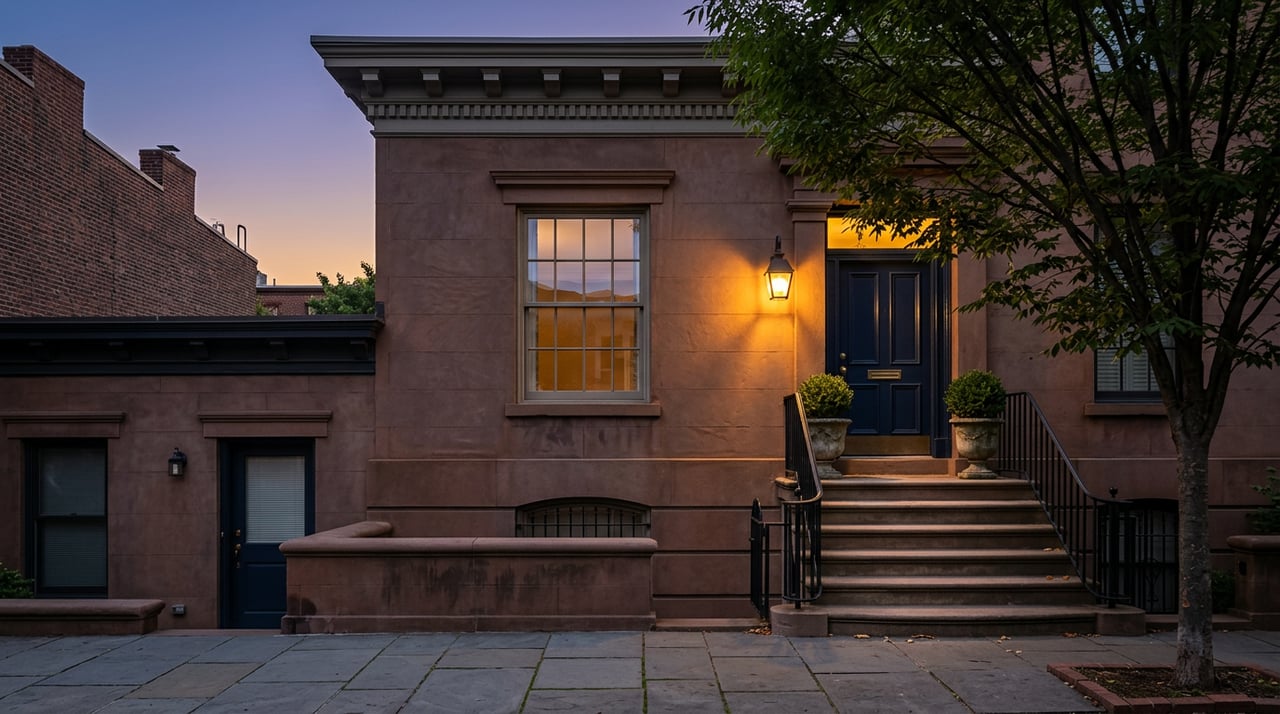
Carroll Gardens offers a distinct townhouse setting characterized by deep front garden setbacks and consistent 19th-century architecture.
- Architectural Profile: 2- and 3-story brownstone rowhouses with high stoops, built primarily between the late 1860s and early 1880s
- Key Feature: Landmarked 33-foot front garden setbacks creating wide, tree-lined residential streetscapes
- Subway Access: F and G trains at Carroll Street and Smith-9th Streets
- Green Space & Retail: Carroll Park; commercial dining and retail along Court Street and Smith Street
Cobble Hill Townhomes: Architectural Variety & Neighborhood Balance
Cobble Hill features a blend of residential quiet and commercial corridors, offering varied housing stock across its historic district.
- Architectural Profile: 19th-century brick and brownstone rowhouses, historic mews, and early group housing developments
- Neighborhood Hub: Cobble Hill Park centered between Verandah Place and Congress Street
- Subway Access: Bergen Street (F, G), Borough Hall (2, 3, 4, 5), and Court Street (R)
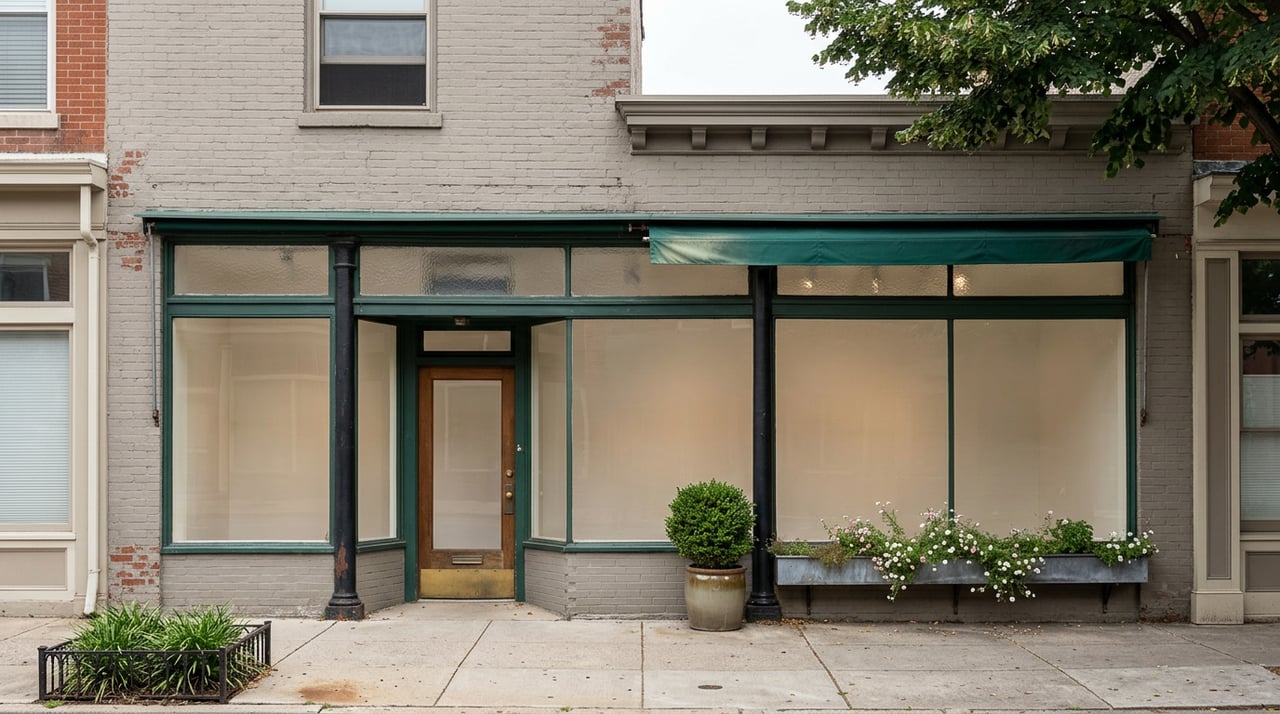
- Retail Corridors: Ground-floor retail, boutiques, and dining along Court Street and Smith Street
Boerum Hill Townhomes: Downtown Access & Urban Mix
Boerum Hill contains 3- and 4-story townhouses with immediate proximity to Downtown Brooklyn transit hubs.
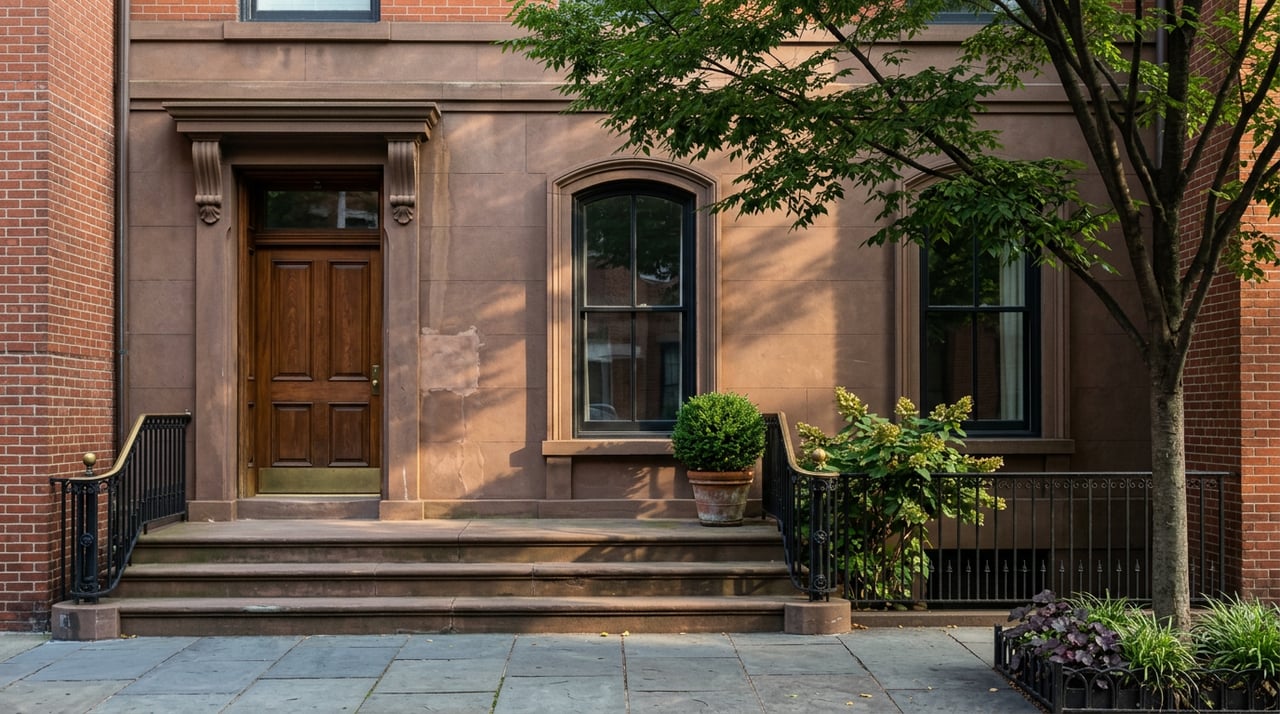
- Architectural Profile: 3- and 4-story Greek Revival, Italianate, Second Empire, and neo-Grec brick townhouses built from the 1840s to 1870s
- Commercial Boundary: Atlantic Avenue commercial corridor featuring antique shops, design boutiques, and restaurants
- Subway Access: Atlantic Av-Barclays Center (2, 3, 4, 5, B, D, N, Q, R, LIRR), Hoyt-Schermerhorn (A, C, G), and Jay St-MetroTech (A, C, F, R)
Comparative Analysis: Privacy, Balance, or Connectivity
Selecting the right neighborhood depends on specific lifestyle and mobility requirements:
Carroll Gardens for Privacy: Unusually deep front yards and low-rise streetscapes provide visual separation from commercial traffic.
Cobble Hill for Balance: Provides a middle ground between quiet residential blocks and established retail stretches along Court and Smith Streets.
Boerum Hill for Connectivity: Offers historic townhouse living with direct access to major transit lines at Atlantic Av-Barclays Center and Downtown Brooklyn.
Landmarks Preservation Commission (LPC) Guidelines for Buyers
Properties located within designated LPC historic districts in Carroll Gardens, Cobble Hill, and Boerum Hill require commission approval for exterior alterations visible from the public right-of-way.
- Regulated Features: Front facades, brownstone stoops, window sash replacements, front doors, cornice repair, roof deck additions, and rear-yard extensions
- Permit Process: Minor repairs qualify for Staff-Level Certificates no Effect (CNE), while major structural modifications require LPC Public Hearing approvals
Frequently Asked Questions
Which neighborhood feels quietest for townhouse buyers in Carroll Gardens, Cobble Hill, and Boerum Hill?
Carroll Gardens generally reads as the most residential and quiet, anchored by its 33-foot deep front garden setbacks and low-rise two- and three-story rowhouse blocks.
Which neighborhood offers the best balance of townhomes and retail in Carroll Gardens, Cobble Hill, and Boerum Hill?
Cobble Hill provides a balanced mix, combining quiet rowhouse blocks with active commercial strips along Court Street and Smith Street.
Which neighborhood is closest to Downtown Brooklyn for townhouse buyers comparing Carroll Gardens, Cobble Hill, and Boerum Hill?
Boerum Hill sits adjacent to Downtown Brooklyn, offering fast access to transit hubs at Atlantic Av-Barclays Center, Jay St-MetroTech, and Borough Hall.
Do landmark rules affect townhouse buyers in Carroll Gardens, Cobble Hill, and Boerum Hill?
Yes. Exterior renovations visible from the street on landmarked blocks require review and approval from the NYC Landmarks Preservation Commission (LPC).
What makes Carroll Gardens townhomes stand out from Cobble Hill and Boerum Hill townhomes?
Carroll Gardens is distinguished by its unique 33-foot front gardens, high stoops, and consistent late 19th-century brownstone architectural streetscapes.
Written by The Kantha Team
The Kantha Team at SERHANT. is a premier luxury real estate group led by Ravi Kantha, specializing in Brooklyn townhomes, historic brownstones, and townhouse investments across Carroll Gardens, Cobble Hill, Boerum Hill, and Brooklyn Heights. The team has guided clients through over $1 billion in New York City real estate transactions.
Related Reading:
- Explore Cobble Hill Homes & Townhouses for Sale
- Park Slope Townhouse Market Guide
- Is Brooklyn Heights the Ultimate Historic Brownstone Address?
- Living in a Historic Brownstone: Architecture & Routine
Source Citation: Neighborhood architectural profiles and designation histories sourced from the NYC Landmarks Preservation Commission (LPC) reports for Carroll Gardens, Cobble Hill, and Boerum Hill Historic Districts. Transit details sourced from MTA Brooklyn maps.